
On Saturday, August 12,2023, the symposium on “The Middle East Changes and the Middle East Practice of Xi Jinping’s Diplomatic Thought” was held in Beijing. This seminar by the renmin university of China xi diplomatic thought research center and renmin university of China regional country institute, from renmin university of China, China institute of modern international relations, the China institute of international issues, and industry experts and scholars gathered, around the recent change in the situation in the Middle East, the future development of regional pattern and xi diplomatic thought in the Middle East practice theme wonderful speech discussion.
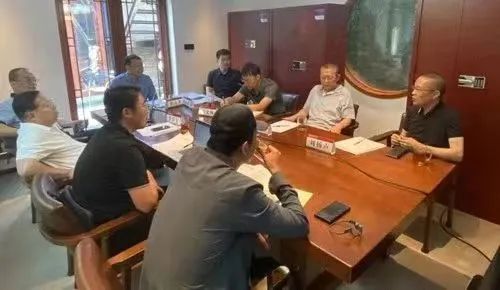
Professor Zhai Dongsheng, Vice President of the School of International Relations, Renmin University of China, and President of the Institute of Regional and Country Studies, delivered a speech first. Professor Zhai Dongsheng extended a warm welcome to all the participating experts and introduced the goals and themes of the conference. Professor Zhai Dongsheng pointed out that in recent years, China’s diplomacy in the Middle East has made rich achievements, which has not only promoted regional peace and stability, but also had a good impact on the global geopolitical and economic situation. The world today is undergoing profound changes unseen in a century. China’s Middle East diplomacy is a successful example of Xi Jinping Thought on Diplomacy and a new development of major-country diplomacy in a new era. We should summarize and sublimate its experience scientifically.
Niu Xinchun, director of the Middle East Institute at the China Institutes of Contemporary International Relations, introduced his judgment and outlook on the situation in the Middle East. He believes that the Middle East is becoming less important in the US’s global strategy in terms of energy technology change and terrorist localization. The contraction of the United States in the Middle East has led to its countries seeking more diverse diplomatic relations, so China and Russia have more room to move in the Middle East. He pointed out that China’s reconciliation is an important achievement, but it should also be noted to the background factors of the diplomatic “easing tide” of Middle East countries since 2021, and the Middle East issue is ultimately an issue of domestic governance of all countries.
Tian Wenlin, a professor at the School of International Studies at Renmin University of China, pointed out that the practice of Xi Jinping’s diplomatic thought in the Middle East has actually matched the shaping of the situation in the West over the past few hundred years. Western experience in the Middle East have led to regional division and conflict, blocked industrialization and the opposition of domestic values. In stark contrast, under the guidance of Xi Jinping Thought on Diplomacy, China has put forward the concepts of “three no policies”, “extensive consultation, joint contribution and shared benefits” and mutual learning among civilizations, which have made Middle East countries feel more cordial and excited. Professor Tian warned that although China and Middle Eastern countries have developed rapidly and has great potential, attention should be paid to the limits and intensity of cooperation.
Li Zixin, an assistant researcher at the Institute of Developing Countries at the China Institute of International Studies, first stressed the importance of Saudi-Israeli relations to the political and economic order in the Middle East, and then shared his analysis of the prospects of Saudi-Israel reconciliation. He believes that Israel has generally maintained a cautious wait-and-see attitude towards the recent changes in the Middle East, and has sought broader substantive cooperation with Saudi Arabia and other countries through various means. In the context of the contraction of the United States from the Middle East, Israel wants to take the initiative to shape a favorable surrounding environment, but the sharpness of its domestic political struggle partly limits the policy space of the Netanyahu government. However, Saudi Arabia does not want to take sides. The Saudi government is “selling” its potential diplomatic space and seeking the best opportunity and form to maximize its interests.
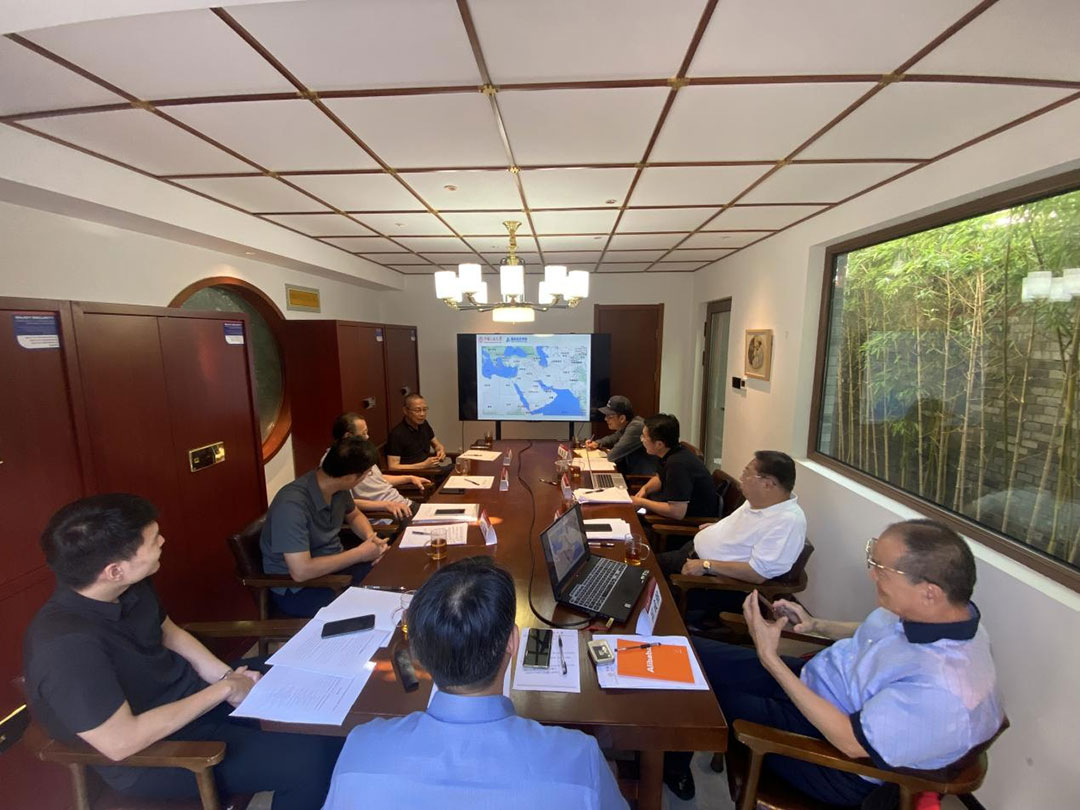
After three experts from the academic and policy circles spoke, three senior experts from the industry shared their wonderful views. Li Zhanjun, former chairman of Beijing Distribution Group and senior researcher of China Enterprise Reform and Development Society, pointed out that the geostrategic competition factor —— is mainly manifested this time as the control ability of the global production network as the competition factor —— will once again become the trigger for political conflicts and wars of major powers. In his opinion, the emergence of the “easing tide” in the Middle East is a local result of the tense and intense conflict between the United States and China. At present, the competition for market resources and development space is becoming more and more fierce. He stressed that the current geopolitical strategic competition between the key to the global manufacturing network and supply chain control, and analyzes the advantages of China’s three competitive elements, respectively is “national capital support made in China, innovation of Chinese private entrepreneurs and complete closed-loop industry supply chain”, I need to use these advantages, through the “Belt and Road” go out national policy, adjust the economic and industrial supply chain layout, the future to build more regional supply network for the gripper, to avoid the global supply network may encounter the risk of “break” or “block”. Li Zhanjun finally reminded that there are still shortcomings for Chinese enterprises and capital to go overseas, such as insufficient binding with local private interests, low efficiency of capital investment, and weak ability to protect overseas interests.
Cui Chengrong, executive Director of the China-Arab States Center and Director of the National Education Cooperation Center, introduced the practical experience of the Technology Transfer Center of an Arab State (hereinafter referred to as the China-Arab States Center) in the modernization transformation of Middle East countries, and focused on the review and prospect of GCC countries. He first introduced the background of the establishment of the China-Arab States Center and the recent important activities. In the past ten years, the China-Arab States Center has been deeply involved in the local social and economic development in 22 countries. In recent years, the China-Arab States Center has kept pace with The Times to help establish and operate the World Digital Economy Forum, which has received a very positive response from relevant countries. Cui emphasized the business of the China-Arab States Center in the GCC countries, and said that after 40 years of modernization, the Gulf countries have become the political and economic focus of the Arab League.
Mr.Liu Yangsheng, founder of Hao Capital, shared his observations on the domestic and diplomatic transformation of Saudi Arabia, the United Arab Emirates and other countries. Recently, the Saudi Arabian high-level government has made frequent visits to China, and the UAE has rarely appointed ministerial officials as ambassadors to China, indicating that the Middle East countries have attached more importance to relations with China in recent years. Liu believes that the development of shale oil technology has turned the relationship between Middle Eastern oil producers and the United States in the energy field from cooperation to competition, and the rapid promotion of the “Belt and Road” strategy around the world has made Middle Eastern countries realize that their modernization transformation cannot be separated from all-round cooperation with China. Countries in the Middle East have different long-term development plans and positioning, but they all hope to learn from China’s experience in infrastructure construction, attracting investment and developing modern manufacturing industry.
After the keynote speech, Professor Zhai Dongsheng presided over the follow-up free discussion session. The experts and teachers asked about the issue of crude oil prices, the security situation in the Middle East, and China’s possible diplomatic action space in the region in the future
