East Asia and Southeast Asia Strategic Studies Brief

Before talking about the historical data of international relations, it is necessary to briefly introduce the greatest modern historian to date, Leopold von Ranke, in a methodological sense, together with the modern and contemporary methods of collecting and textual investigation of historical data, which he established as the primary founder. Micro-exploration is very important. Microhistorical inquiry, which relies on rigorous attitude, strict procedure and necessary intelligence, forms the cornerstone and a large part of the content of historical research, and its main method is the fundamental method of modern historiography. The establishment of this method, and even the establishment of modern history itself, is closely linked to Ranke. Rank’s primary contribution to historiography and historiography was the creation of the primary scientific method of modern historiography, based strictly on contemporaneous sources (especially archival sources), together with a major innovation in the method, the critical examination of historical sources. In other words, he established the principle of using contemporaneous data, especially archival historical data, as the basis of historical research, and established the basic method of scientific research of historical data. On the other hand, Rank was responsible for the great turning point of the historiography revolution, as the great historian Gooch put it, “when he began to write, the eminent historians believed that memoirs and Chronicles were the primary authoritative sources.” By the time he had finished writing, every scholar whose reputation was yet to be established, or whose reputation might be discredited, had learned that it was necessary to rely at least on the documents and letters of the subjects themselves and of those who had direct contact with the events they recounted.” [1] In the latter, he may be said to have established a science of historical evidence by analyzing the sources left by authors, whether contemporary or later, in terms of their personal purport, social connections, and the likelihood of their knowledge of historical events, and by comparing them with relevant sources written by others. On the basis of the above fundamental methods he established, and especially on the basis of the extensive excavation and application of the archival materials of many countries, Rank faithfully reproduced the political history of Central and Western Europe, especially the political history of the great powers of Central and Western Europe.

The first principle of the modern and contemporary methods of collecting historical materials pioneered by Rank is to collect as much as possible the original archival historical materials stored in public and private archival storage places or storage institutions, that is, the most important “first-hand” historical materials. More generally, before and during the study of a historical subject, it is necessary to determine comprehensively and precisely what kind of historical materials are needed, what specific categories of historical materials they belong to, and to distinguish and combine the principal and secondary ones among them; Then, it is necessary to investigate the specific places where the required historical data can be found, and then try to excavate and collect. For unpublished sources, the archival sources mentioned above, it is first necessary to know whether they have been declassified, that is, whether they are accessible (in many cases, what is available to researchers and what is not); In the case of archival materials that are already accessible, attention and detailed information about their preservation, concentration and classification and access procedures are required. For historical materials that have already been published, such as collections of official archival documents edited and published by the government, or public documents edited and published by non-governmental organizations or individuals, or memoirs, letters, diaries, etc., of persons concerned, if bibliography has already been compiled in the subject area to be studied or closely related to it, Familiarity with bibliography is often required. The textual research of historical materials means the identification of the nature of historical materials and its value as historical evidence. textual criticism can be divided into two aspects: the former is the revision and discrimination of falsification, or “textual criticism”, while the latter is about whether the historical facts described in the historical materials are credible and accurate, or to what extent. No matter what kind of historical documents, we must try our best to have a deep understanding of the source of information and personality of the author. In particular, in the case of so-called secondary sources, i.e., historical instruments which are not direct witnesses of historical events (i.e., the parties themselves and those who have direct contact with the events they recount), whether they are based primarily on primary sources or not, whether they are contemporary writings or later historical studies or accounts, It is necessary to examine the author’s understanding of the historical events described by the direct witnesses and his ability to accurately record them.

According to the decreasing order of their original degree (or, in a sense, their importance), the historical materials of international relations can be divided into the following six categories: (1) unpublished archival historical materials; (2) Published archival historical materials; (3) Official history; (4) Public documents; (5) Memoirs, collections of letters, published diaries, newspaper reports or reviews at the time, etc.; (6) Secondary materials (books and articles).

In general, apart from the absolute superiority of the first two types of historical materials, namely unpublished and published archival historical materials in terms of importance and even reliability, the value of the other types of historical materials mentioned above is relative to each other and varies according to different specific occasions. For example, there can be memoirs, letters, and diaries that have been rigorously researched or judged by common sense to be of high historical value (higher than some official histories and public documents), and there can be such documents that are not, or even very unreliable. For example, the quality of secondary sources can vary greatly, among which monographs based mainly on primary sources can be vastly superior to general reviews based mainly on other secondary sources, and many works belonging to the former category, subject to rigorous examination or widely recognized by the relevant historians, can be regarded as superior in historical value to some historical sources that are higher in the above order. The same is true of official history. There are also official histories with very detailed and reliable historical materials and fair and objective historical theories, and those with thin and one-sided historical materials that are intended to whitewash the past or pursue other improper purposes. In short, in addition to the basic principle of collecting and using as much archival data as possible, most of the rest must be based on the specific historical situation in which the specific research task is located.

Unpublished archival materials can be official or private documents. The former category refers to unpublished archival documents that are generally stored, owned and disposed of by official institutions, while the latter category refers to unpublished archival documents that are generally stored by private or official institutions, but whose ownership and disposition are exclusively private. In recent years, due to the development of historiography and archival methods, a new category of unpublished archival materials has emerged, that is, oral records recalling historical events or processes, but their quantity, importance and general reliability are far less than that of official and private documents described here. Therefore, relatively speaking, it is especially necessary to be verified.
Evolution and Innovation Economics Review

Before talking about the historical data of international relations, it is necessary to briefly introduce the greatest modern historian to date, Leopold von Ranke, in a methodological sense, together with the modern and contemporary methods of collecting and textual investigation of historical data, which he established as the primary founder. Micro-exploration is very important. Microhistorical inquiry, which relies on rigorous attitude, strict procedure and necessary intelligence, forms the cornerstone and a large part of the content of historical research, and its main method is the fundamental method of modern historiography. The establishment of this method, and even the establishment of modern history itself, is closely linked to Ranke. Rank’s primary contribution to historiography and historiography was the creation of the primary scientific method of modern historiography, based strictly on contemporaneous sources (especially archival sources), together with a major innovation in the method, the critical examination of historical sources. In other words, he established the principle of using contemporaneous data, especially archival historical data, as the basis of historical research, and established the basic method of scientific research of historical data. On the other hand, Rank was responsible for the great turning point of the historiography revolution, as the great historian Gooch put it, “when he began to write, the eminent historians believed that memoirs and Chronicles were the primary authoritative sources.” By the time he had finished writing, every scholar whose reputation was yet to be established, or whose reputation might be discredited, had learned that it was necessary to rely at least on the documents and letters of the subjects themselves and of those who had direct contact with the events they recounted.” [1] In the latter, he may be said to have established a science of historical evidence by analyzing the sources left by authors, whether contemporary or later, in terms of their personal purport, social connections, and the likelihood of their knowledge of historical events, and by comparing them with relevant sources written by others. On the basis of the above fundamental methods he established, and especially on the basis of the extensive excavation and application of the archival materials of many countries, Rank faithfully reproduced the political history of Central and Western Europe, especially the political history of the great powers of Central and Western Europe.

The first principle of the modern and contemporary methods of collecting historical materials pioneered by Rank is to collect as much as possible the original archival historical materials stored in public and private archival storage places or storage institutions, that is, the most important “first-hand” historical materials. More generally, before and during the study of a historical subject, it is necessary to determine comprehensively and precisely what kind of historical materials are needed, what specific categories of historical materials they belong to, and to distinguish and combine the principal and secondary ones among them; Then, it is necessary to investigate the specific places where the required historical data can be found, and then try to excavate and collect. For unpublished sources, the archival sources mentioned above, it is first necessary to know whether they have been declassified, that is, whether they are accessible (in many cases, what is available to researchers and what is not); In the case of archival materials that are already accessible, attention and detailed information about their preservation, concentration and classification and access procedures are required. For historical materials that have already been published, such as collections of official archival documents edited and published by the government, or public documents edited and published by non-governmental organizations or individuals, or memoirs, letters, diaries, etc., of persons concerned, if bibliography has already been compiled in the subject area to be studied or closely related to it, Familiarity with bibliography is often required. The textual research of historical materials means the identification of the nature of historical materials and its value as historical evidence. textual criticism can be divided into two aspects: the former is the revision and discrimination of falsification, or “textual criticism”, while the latter is about whether the historical facts described in the historical materials are credible and accurate, or to what extent. No matter what kind of historical documents, we must try our best to have a deep understanding of the source of information and personality of the author. In particular, in the case of so-called secondary sources, i.e., historical instruments which are not direct witnesses of historical events (i.e., the parties themselves and those who have direct contact with the events they recount), whether they are based primarily on primary sources or not, whether they are contemporary writings or later historical studies or accounts, It is necessary to examine the author’s understanding of the historical events described by the direct witnesses and his ability to accurately record them.

According to the decreasing order of their original degree (or, in a sense, their importance), the historical materials of international relations can be divided into the following six categories: (1) unpublished archival historical materials; (2) Published archival historical materials; (3) Official history; (4) Public documents; (5) Memoirs, collections of letters, published diaries, newspaper reports or reviews at the time, etc.; (6) Secondary materials (books and articles).

In general, apart from the absolute superiority of the first two types of historical materials, namely unpublished and published archival historical materials in terms of importance and even reliability, the value of the other types of historical materials mentioned above is relative to each other and varies according to different specific occasions. For example, there can be memoirs, letters, and diaries that have been rigorously researched or judged by common sense to be of high historical value (higher than some official histories and public documents), and there can be such documents that are not, or even very unreliable. For example, the quality of secondary sources can vary greatly, among which monographs based mainly on primary sources can be vastly superior to general reviews based mainly on other secondary sources, and many works belonging to the former category, subject to rigorous examination or widely recognized by the relevant historians, can be regarded as superior in historical value to some historical sources that are higher in the above order. The same is true of official history. There are also official histories with very detailed and reliable historical materials and fair and objective historical theories, and those with thin and one-sided historical materials that are intended to whitewash the past or pursue other improper purposes. In short, in addition to the basic principle of collecting and using as much archival data as possible, most of the rest must be based on the specific historical situation in which the specific research task is located.

Unpublished archival materials can be official or private documents. The former category refers to unpublished archival documents that are generally stored, owned and disposed of by official institutions, while the latter category refers to unpublished archival documents that are generally stored by private or official institutions, but whose ownership and disposition are exclusively private. In recent years, due to the development of historiography and archival methods, a new category of unpublished archival materials has emerged, that is, oral records recalling historical events or processes, but their quantity, importance and general reliability are far less than that of official and private documents described here. Therefore, relatively speaking, it is especially necessary to be verified.

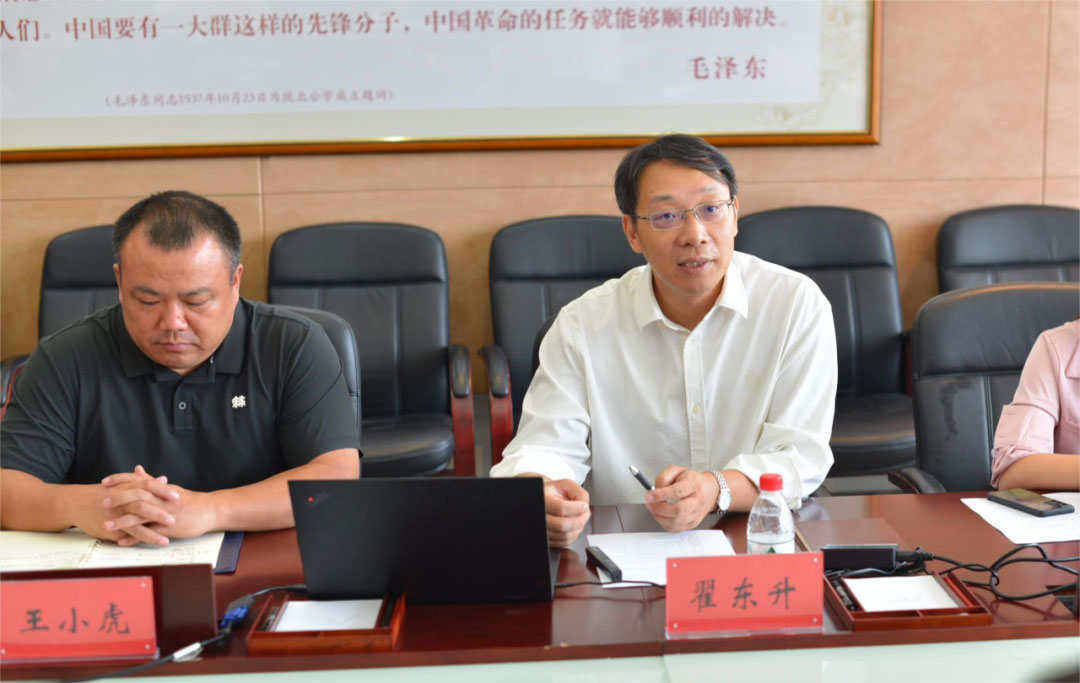
Di Dongsheng went to Suzhou Campus to investigate the construction of regional national research talent team

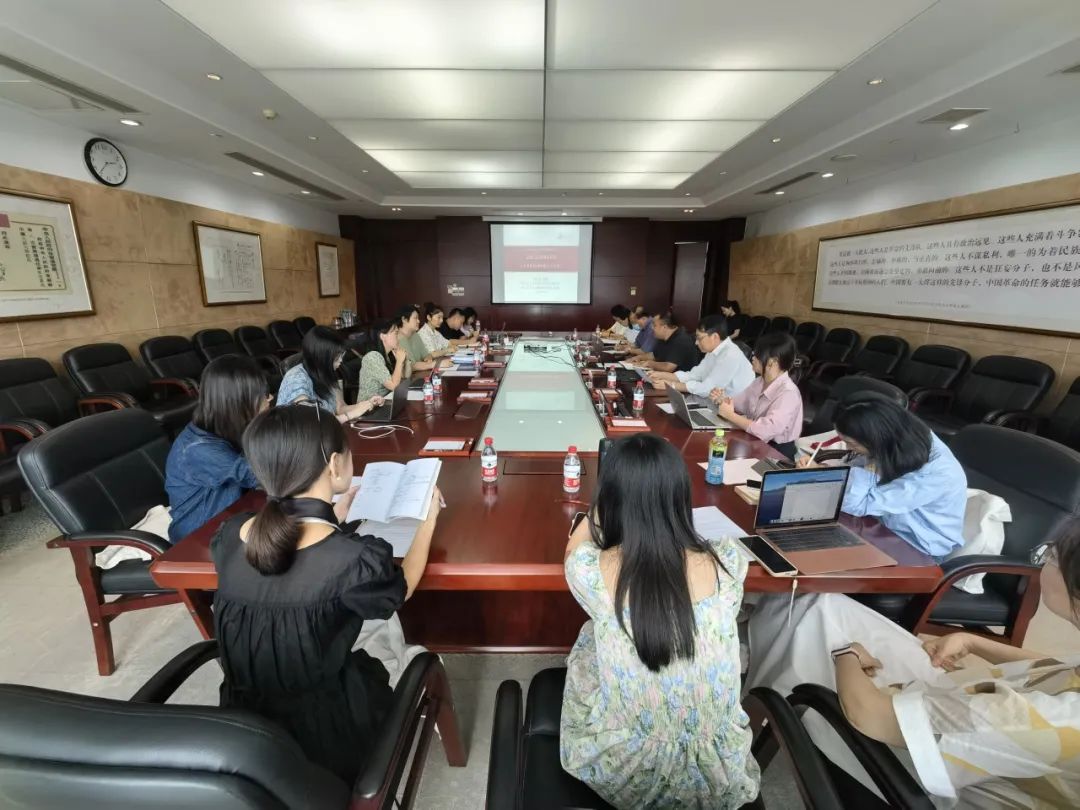
    On the afternoon of September 8th, the Regional National Research Institute of Renmin University of China and the Suzhou Campus of Renmin University of China jointly held a symposium on the construction of French and French-speaking researchers. Renmin university of China, vice President of the school of international relations, regional national institute preparation team leader dong-sheng zhai, professor, law school, director of the French research Feng Shounong, and vice President of the international college Xu Xingmei attended the meeting, the meeting by the Suzhou campus management committee and deputy director of international school, dean xiao-hu wang.

      At the beginning of the conference, Mr.Zhai Dongsheng elaborated on the background and development of regional national studies, and deeply interpreted the core concepts, theoretical framework, research methods and knowledge pedigree of this emerging interdisciplinary discipline. Subsequently, he systematically introduced the construction ideas and educational concepts of Renmin University of China from six aspects, including work foundation, project characteristics, training objectives, key measures, training mechanism and policy needs. At the symposium, Mr.Zhai Dongsheng emphasized the importance of French and French language research teams in regional and national disciplines, and encouraged French teachers in Suzhou Campus to actively participate in the in-service master and doctoral programs of Regional and national research institutes, and contribute to the development of regional and national disciplines and talent training.

      At the meeting, Mr.Feng Shouong introduced the basic situation of the French Teaching and Research Center of China Law School, as well as his attempts in regional country research in recent years. He encouraged young teachers to broaden their research horizons and actively transform their research direction.

In the following exchange and discussion, the young teachers of the French Teaching and Research Center had an in-depth exchange with Zhai Dongsheng on career development planning, research direction transformation, regional and national science research methods, and expressed their yearning for the in-service master’s and doctoral programs of the regional and national research institutes.

      In conclusion, President Wang Xiaohu pointed out that Suzhou Campus is the growth pole of the university in the new era, a new engine to enhance the international community, and a strategic fulcrum to serve the world-class city cluster in the Yangtze River Delta. Discipline construction, scientific research development and teacher career development are all important contents of the optimization and improvement work of Suzhou campus in the new decade. He expressed his gratitude to the Regional and Country Institute for the direction and path for the construction of regional national research talent team in Suzhou Campus. Meanwhile, he hoped that French teachers could make full use of the high-quality platform and rich resources provided by the school to improve their teaching and research ability and make contributions to the development of the campus, school and discipline.

The seminar on “Changes in the Middle East and the Middle East Practice of Xi Jinping Thought on Diplomacy” was successfully held

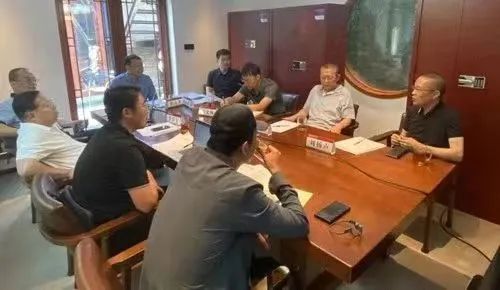
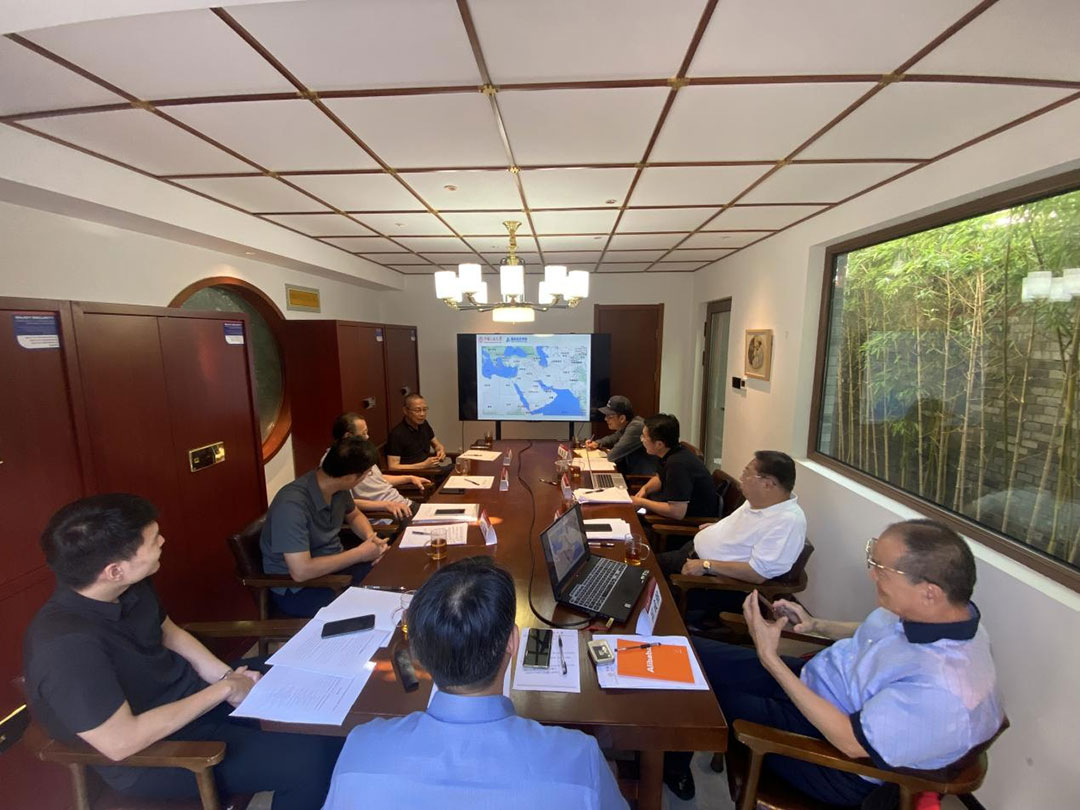
      On Saturday, August 12,2023, the symposium on “The Middle East Changes and the Middle East Practice of Xi Jinping’s Diplomatic Thought” was held in Beijing. This seminar by the renmin university of China xi diplomatic thought research center and renmin university of China regional country institute, from renmin university of China, China institute of modern international relations, the China institute of international issues, and industry experts and scholars gathered, around the recent change in the situation in the Middle East, the future development of regional pattern and xi diplomatic thought in the Middle East practice theme wonderful speech discussion.

      Professor Zhai Dongsheng, Vice President of the School of International Relations, Renmin University of China, and President of the Institute of Regional and Country Studies, delivered a speech first. Professor Zhai Dongsheng extended a warm welcome to all the participating experts and introduced the goals and themes of the conference. Professor Zhai Dongsheng pointed out that in recent years, China’s diplomacy in the Middle East has made rich achievements, which has not only promoted regional peace and stability, but also had a good impact on the global geopolitical and economic situation. The world today is undergoing profound changes unseen in a century. China’s Middle East diplomacy is a successful example of Xi Jinping Thought on Diplomacy and a new development of major-country diplomacy in a new era. We should summarize and sublimate its experience scientifically.
Niu Xinchun, director of the Middle East Institute at the China Institutes of Contemporary International Relations, introduced his judgment and outlook on the situation in the Middle East. He believes that the Middle East is becoming less important in the US’s global strategy in terms of energy technology change and terrorist localization. The contraction of the United States in the Middle East has led to its countries seeking more diverse diplomatic relations, so China and Russia have more room to move in the Middle East. He pointed out that China’s reconciliation is an important achievement, but it should also be noted to the background factors of the diplomatic “easing tide” of Middle East countries since 2021, and the Middle East issue is ultimately an issue of domestic governance of all countries.

Tian Wenlin, a professor at the School of International Studies at Renmin University of China, pointed out that the practice of Xi Jinping’s diplomatic thought in the Middle East has actually matched the shaping of the situation in the West over the past few hundred years. Western experience in the Middle East have led to regional division and conflict, blocked industrialization and the opposition of domestic values. In stark contrast, under the guidance of Xi Jinping Thought on Diplomacy, China has put forward the concepts of “three no policies”, “extensive consultation, joint contribution and shared benefits” and mutual learning among civilizations, which have made Middle East countries feel more cordial and excited. Professor Tian warned that although China and Middle Eastern countries have developed rapidly and has great potential, attention should be paid to the limits and intensity of cooperation.
Li Zixin, an assistant researcher at the Institute of Developing Countries at the China Institute of International Studies, first stressed the importance of Saudi-Israeli relations to the political and economic order in the Middle East, and then shared his analysis of the prospects of Saudi-Israel reconciliation. He believes that Israel has generally maintained a cautious wait-and-see attitude towards the recent changes in the Middle East, and has sought broader substantive cooperation with Saudi Arabia and other countries through various means. In the context of the contraction of the United States from the Middle East, Israel wants to take the initiative to shape a favorable surrounding environment, but the sharpness of its domestic political struggle partly limits the policy space of the Netanyahu government. However, Saudi Arabia does not want to take sides. The Saudi government is “selling” its potential diplomatic space and seeking the best opportunity and form to maximize its interests.

      After three experts from the academic and policy circles spoke, three senior experts from the industry shared their wonderful views. Li Zhanjun, former chairman of Beijing Distribution Group and senior researcher of China Enterprise Reform and Development Society, pointed out that the geostrategic competition factor —— is mainly manifested this time as the control ability of the global production network as the competition factor —— will once again become the trigger for political conflicts and wars of major powers. In his opinion, the emergence of the “easing tide” in the Middle East is a local result of the tense and intense conflict between the United States and China. At present, the competition for market resources and development space is becoming more and more fierce. He stressed that the current geopolitical strategic competition between the key to the global manufacturing network and supply chain control, and analyzes the advantages of China’s three competitive elements, respectively is “national capital support made in China, innovation of Chinese private entrepreneurs and complete closed-loop industry supply chain”, I need to use these advantages, through the “Belt and Road” go out national policy, adjust the economic and industrial supply chain layout, the future to build more regional supply network for the gripper, to avoid the global supply network may encounter the risk of “break” or “block”. Li Zhanjun finally reminded that there are still shortcomings for Chinese enterprises and capital to go overseas, such as insufficient binding with local private interests, low efficiency of capital investment, and weak ability to protect overseas interests.

Cui Chengrong, executive Director of the China-Arab States Center and Director of the National Education Cooperation Center, introduced the practical experience of the Technology Transfer Center of an Arab State (hereinafter referred to as the China-Arab States Center) in the modernization transformation of Middle East countries, and focused on the review and prospect of GCC countries. He first introduced the background of the establishment of the China-Arab States Center and the recent important activities. In the past ten years, the China-Arab States Center has been deeply involved in the local social and economic development in 22 countries. In recent years, the China-Arab States Center has kept pace with The Times to help establish and operate the World Digital Economy Forum, which has received a very positive response from relevant countries. Cui emphasized the business of the China-Arab States Center in the GCC countries, and said that after 40 years of modernization, the Gulf countries have become the political and economic focus of the Arab League.

Mr.Liu Yangsheng, founder of Hao Capital, shared his observations on the domestic and diplomatic transformation of Saudi Arabia, the United Arab Emirates and other countries. Recently, the Saudi Arabian high-level government has made frequent visits to China, and the UAE has rarely appointed ministerial officials as ambassadors to China, indicating that the Middle East countries have attached more importance to relations with China in recent years. Liu believes that the development of shale oil technology has turned the relationship between Middle Eastern oil producers and the United States in the energy field from cooperation to competition, and the rapid promotion of the “Belt and Road” strategy around the world has made Middle Eastern countries realize that their modernization transformation cannot be separated from all-round cooperation with China. Countries in the Middle East have different long-term development plans and positioning, but they all hope to learn from China’s experience in infrastructure construction, attracting investment and developing modern manufacturing industry.

After the keynote speech, Professor Zhai Dongsheng presided over the follow-up free discussion session. The experts and teachers asked about the issue of crude oil prices, the security situation in the Middle East, and China’s possible diplomatic action space in the region in the future

The 10th Anniversary of the Belt and Road Initiative: Achievements and Future “International Academic Forum was held at Renmin University of China

Recently, the “Belt and Road 10th Anniversary: Achievements and Future” international Academic Forum was held at Renmin University of China, where more than 150 Chinese and foreign politicians, university presidents, experts and scholars from 13 countries and 68 institutions gathered to discuss the achievements and future of the “Belt and Road”.

Zhang Donggang, Secretary of the Party Committee of Renmin University of China, Sun Zhuangzhi, Director of the Institute of Russian East European and Central Asian Studies of the Chinese Academy of Social Sciences, Sergei Glaziev, Director of the Department of Integration and Macroeconomics of the Eurasian Economic Commission and former Economic Adviser to the President of Russia, and Ayiguli Abdelayeva, President of Kyrgyzstan State University, attended and addressed the opening ceremony. Zheng Shuiquan, deputy Party secretary of Renmin University of China, presided over the opening ceremony.

This year marks the tenth anniversary of the “the Belt and Road” initiative and a new starting point for Chinese path to modernization to embark on a new journey. Over the past decade, the “the Belt and Road Initiative” has been transformed from a Chinese initiative to an international practice, from concept to action, from vision to reality, and has become a popular international public product and international cooperation platform.

Zhang Donggang said that the Renmin University of China will take this forum as an opportunity to unswervingly contribute more wisdom, plans and strength to the people’s congress to continue to promote high-quality co construction of the “the Belt and Road”, implement the global development initiative, global security initiative and global civilization initiative, and continue to respond to unprecedented changes in the world, times and history!

Sun Zhuangzhi said that in the past ten years, the construction of the “the Belt and Road” has fully considered the characteristics of phased and regional differences, and has formed a unique new concept and model of international cooperation. The joint construction of the “the Belt and Road” conforms to the internal requirements of the reform of the global governance system, highlights the awareness of a community with a shared future for mankind, and provides new ideas and plans for improving the reform of the global governance system.

Sergei Graziev stated that the world is rapidly changing today, and the governance paradigm of global politics and economy is also constantly changing. At present, the total amount of financial cooperation under the “the Belt and Road” framework has exceeded the World Bank, the Asian Development Bank and other international financial organizations combined. Jointly building the “the Belt and Road” has become a new engine for international economic cooperation and development.
Ayeguli Abdlayeva said that the joint construction of the “the Belt and Road” has become the world’s largest international cooperation platform. The “China fever” and “Chinese fever” continue to heat up in Central Asia. I believe that in the future, China’s cooperation with Kyrgyzstan and cooperation with Central Asia will be further expanded and deepened.
During the keynote speech, Tian Dewen, Deputy Director of the Russian Institute of Eastern European and Central Asian Studies at the Chinese Academy of Social Sciences, Yang Guangbin, Dean of the School of International Relations at Renmin University of China, and Erdo Tulyakov, Director of the Uzbekistan Development Strategy Center, delivered speeches successively.
Tian Dewen said that under the framework of China’s diplomacy in the new era, the “the Belt and Road” initiative is the most important landmark project. Looking ahead, humanity will be in a long-term process of surpassing Western international relations models with a new type of international relations model, which will be a process of surpassing Cold War thinking with the “Silk Road spirit”.
Yang Guangbin said that with the “the Belt and Road” initiative as a symbol, China’s global identity has undergone revolutionary changes. We have proposed “world politics” to explain China’s global identity changes, which are based on the institutional changes driven by political trends formed in the world market, as well as the shaping of major country relations and world order, providing a basic methodology for observing changes in the world order.

Erdo Tulyakov stated that China is an important diplomatic and economic partner of Uzbekistan. In recent years, economic and trade cooperation between the two countries has flourished. China and Uzbekistan have made joint efforts to promote the “the Belt and Road” initiative, actively promoting the prosperity and development of the region and the world.
At the subsequent main forum and sub forum, the experts and scholars attending the meeting held discussions around the theme of “History and Times: Review of Ten Year Achievements of the the Belt and Road”, “Initiatives and Ideas: Development of the the Belt and Road and a Community with a Shared Future for Humanity”, “Practice and Development: Connectivity of the the Belt and Road, Green Development and People to People Cooperation”.

Gao Jingzhai, Secretary of the Party Committee of the Russian Institute of Eastern European and Central Asian Studies at the Chinese Academy of Social Sciences, and Zhang Xiaojing, Secretary of the Party Committee of the School of International Relations at Renmin University of China, delivered speeches at the closing ceremony of the forum. Gao Jingzhai said that it is necessary to closely combine the “the Belt and Road” study with the study of Chinese path to modernization and the study of Chinese civilization and culture, so as to better pool consensus and form joint forces, so that the joint construction of the “the Belt and Road” will be stable in the next decade and even longer. Zhang Xiaojing said that educational exchanges and cooperation are an important way to achieve people to people connectivity. He hopes that more young people in the “the Belt and Road” countries can enhance understanding, enhance mutual trust and increase cooperation in face-to-face exchanges, and walk across mountains and seas, so as to work together for a better future of the “the Belt and Road”.

The forum was co sponsored by the School of International Relations of Renmin University of China and the Russian Institute for Eastern Europe and Central Asia of the Chinese Academy of Social Sciences, organized by the Russian Institute for Eastern Europe and Central Asia of Renmin University of China, and co organized by the “the Belt and Road” Research Center of the Chinese Academy of Social Sciences, the “the Belt and Road” Green Development Research Institute of the Chinese Center for International Cultural Exchange, and the Science and Technology and Innovation Policy Research Center of the Hong Kong Polytechnic University.

The first South Asia Academic Salon of the Regional National Institutes was successfully held

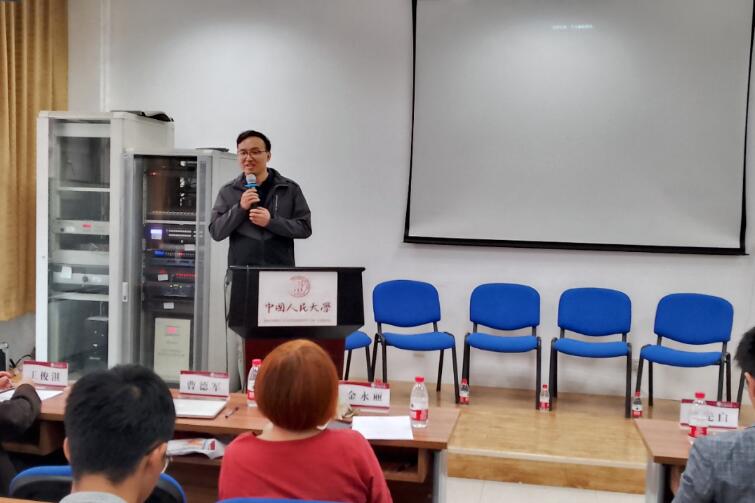
On October 12, “South Asian Studies from the Interdisciplinary Perspective” – the first academic salon on South Asian Studies at the Regional and National Research Institute of Renmin University of China was successfully held. This salon is not only an internal exchange of teachers related to South Asia studies in Renmin University of China, but also a collective appearance of some South Asia teaching and research forces in the university. The Salon fully reflects the interdisciplinary characteristics of regional and country studies, and adopts the “2+2+2” model in combination with the advantages of Renmin University itself. Two teachers from the School of International Relations, the School of History and the School of Philosophy each participated in the salon. The academic salon was hosted by Professor Wang Zhaodong, lecturer of the School of International Relations.

Professor Ji Xianbai, associate professor of the School of International Relations and deputy leader of the Preparatory group of the Regional National Research Institute, first made a guiding speech for the academic salon. Mr. Ji warmly welcomed the speakers and the participating teachers and students inside and outside the university, and focused on the long history and outstanding achievements of Renmin University’s regional and country studies, as well as the school’s overall planning and construction ideas for regional and country studies, and its support and expectations for the direction of South Asian regional studies.

Sharon then moved on to the keynote. Jin Yongli, associate professor of the School of History, gave a report entitled “The ‘Dual Mission’ in the Field of Indian History Writing since Modern Times”, especially emphasizing the “breaking” and “establishing” of modern Indian history writing: breaking the religious color of traditional history writing, and establishing the scientific, rational and national writing of modern history. Teacher Jin believes that between “breaking” and “establishing”, it has not only brought constructive but also destructive influence to the writing of Indian history.

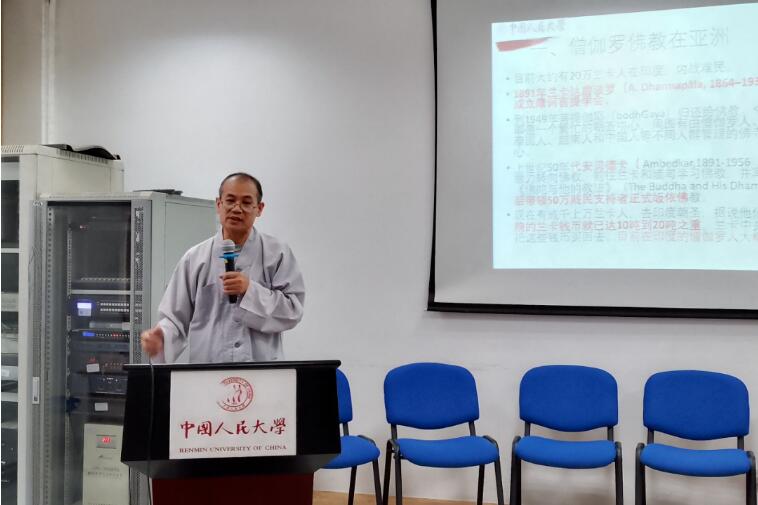
Professor Wei Shan of the Faculty of Philosophy introduced the world spread of contemporary Sri Lankan Buddhism. Although Sri Lanka is a weak and small country, Sinhalese Buddhism has achieved significant overseas spread through the power of the people. Recent years have seen rapid growth of Sinhalese Buddhists in Malaysia, Singapore, Taiwan, the United Kingdom, Germany, and North America. The Sri Lankan government has also changed the policy of restricting immigration, recognized dual citizenship, encouraged overseas development of Chinese, and awarded honors to outstanding overseas nationals, encouraging them to contribute to the motherland and promote development, which has played a good effect.

Wang Junqi, associate professor of the School of Philosophy, discusses the advantages and feasibility of Sanskrit as a tool to construct Indian nationalism with the title “The Dispute of National Name and Sanskrit Nationalism in India”. After a brief introduction to the history of the popularity of Sanskrit in ancient India, Mr. Wang focused on the revival of Sanskrit in India in recent years, and the Sanskrit culture in both academic and everyday writing in India. This is supported by both academic and national policies. Wang argues that Sanskrit nationalism, with its wider reach and deeper historical basis than Hindu nationalism, is better placed to be an effective way of unifying Indian democracy.

Cao Dejun, associate professor of the School of International Relations, published a report entitled “Reflections on the Discipline Construction of Regional and Country Studies”. He first summarized the past, present and future of national studies, looked forward to the important position of South Asia in future studies, and stressed the importance of Indian studies from two aspects. Cao Dejun put forward three directions for regional and country development: “humanistic orientation, scientific orientation and specific orientation”, pointing out that regional and country studies should pay attention to both knowledge production and policy research, the former being the basis of the latter.

Wu Lingjing, lecturer of the School of History, mainly introduced the ecological network of sandalwood trade in modern India, and sort out how the trade of sandalwood in Mysore, India, emerged, how to develop abroad and how to eventually form an “ecological cultural network” of global sandalwood trade. Mr. Wu summed it up into five stages: initial rise, Empire 1 (fluctuating development period), Empire 2 (resource control), Empire 3 (difficult transformation) and resource crisis period.

Wang Zhaodong, a lecturer at the Institute of International Relations, commented on the nature of the “border heritage” of British India, arguing that it was not a modern border, but a multi-layered border system between frontier and border. He pointed out that after independence, India interpreted the multi-layered boundary system with the boundary as one of the important reasons for the Sino-Indian border conflict. The boundary issue has a dual meaning for India. The boundary that is under vague external control and ignored in colonial times, and the internal centralization of the frontier tribal areas that were formerly free from federal jurisdiction are closely related to the construction of the Indian nation state in the post-colonial era.

After the keynote address, the speakers engaged in intense and in-depth discussions with the audience on the soft power of Buddhism in Sri Lanka, Sikh separatism, strategic culture in India and other issues. The academic salon was a complete success.

The first sub-forum of the China-Eu Civilisations Forum “China-Eu People-to-people Exchanges in the Post-COVID-19 Era” was held

As one of the three pillars of China-Eu relations, people-to-people and cultural exchanges play an important role in promoting political mutual trust and economic and trade exchanges. Effective interaction in such areas as education, culture, science and technology, youth and women is not only a physical vehicle for the dialogue between Chinese and European civilizations, but also an effective way to enhance mutual understanding and recognition between our peoples and promote the overall and all-round development of China-Eu and China-France relations. China has established high-level people-to-people exchange mechanisms with the EU, France, the UK and Germany, and promoted people-to-people exchanges between China and European countries through various forms of people-to-people exchanges and various channels.

As one of the research bases for China-Europe people-to-people exchanges under the supervision of the Department of International Affairs of the Ministry of Education, the Center for China-Eu People-To-People Exchanges at Renmin University of China has long been committed to the research of China-Eu high-level people-to-people exchanges, providing administrative advice and academic support for the establishment of mechanisms, the promotion of policies and the preparation of related activities.

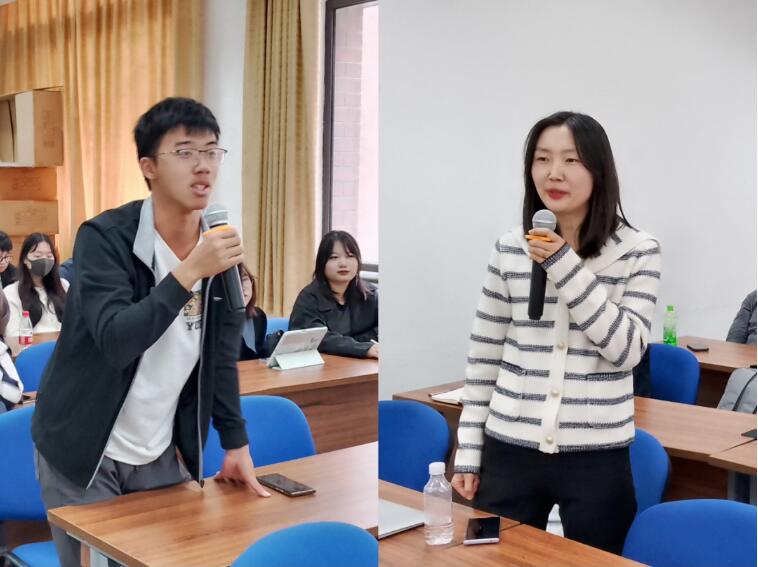
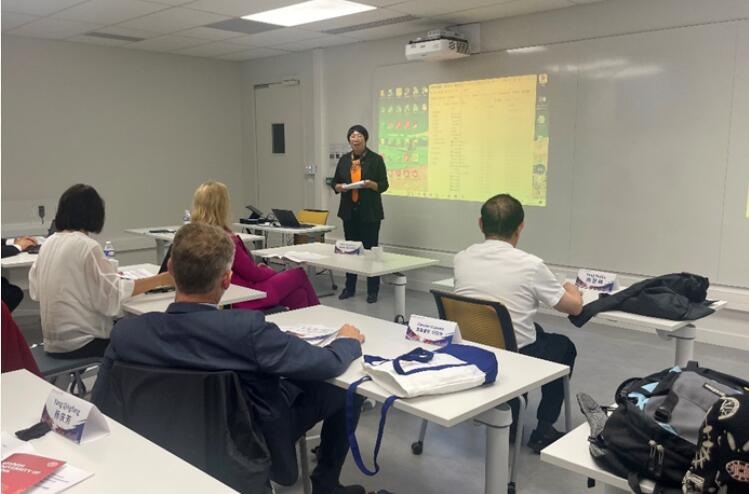
On September 21, the first sub-forum of the China-Eu Civilisations Forum “China-Eu People-To-People Exchanges in the Post-COVID-19 Era” was held in Paris, France. The forum invited a total of 11 experts and scholars from China and Europe to exchange ideas, mechanisms, policy paths, achievements and issues related to China-Eu people-to-people and cultural exchanges, including higher education, cultural exchanges, language policies, visa policies, science and technology innovation cooperation and other topics. The forum was hosted by the China-Europe Center for People-to-people Exchange at Renmin University of China and moderated by Associate Professor Yan Jin, Executive Director of the Center.

In her opening speech, Associate Professor Yan Jin said, “The epidemic has changed the basic way of traditional international interaction, and has also profoundly affected the scope, frequency and path of people-to-people exchanges between China and Europe. How to enhance people-to-people exchanges and thus promote political and economic cooperation in the post-COVID-19 era is an important issue of concern to both China and the EU. The discussion of this issue can not only effectively respond to core concerns at the policy level, but also enhance China-Eu academic dialogue and understanding at the practical level.”

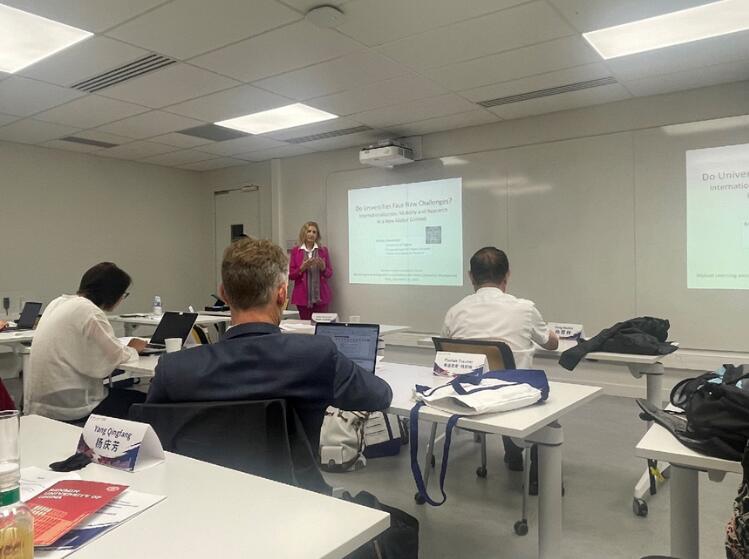
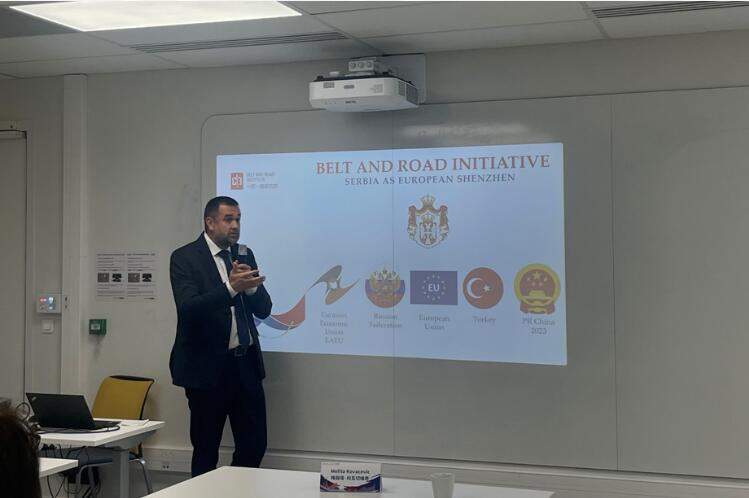
Professor Melita Kovacevic, former Vice-Chancellor of the University of Zagreb and Chair of the Committee on Doctoral Education of the European University Association, discussed the challenges facing higher education in the light of the current new situation of globalization and geopolitical development, by discussing the impact of the pandemic on the internationalization of European universities, the mobility of students and scholars, and research. To explore the institutional dilemmas and path dependence of China-Eu higher education and research cooperation, and to provide possible solutions on how to break through the impact of COVID-19 on China-Eu higher education exchanges.

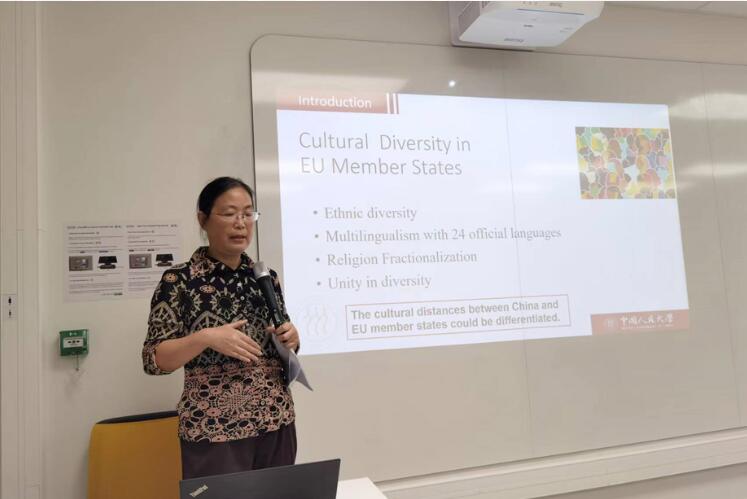
Professor Huang Yanfen of the School of Public Administration and Deputy Director of the China-Europe Cultural Exchange Research Center at Renmin University of China explains the impact of cultural identity on bilateral trade and economic cooperation between China and Europe from the theoretical perspective of “cultural distance”, and constructs empirical analysis of the negative impact of cultural differences on bilateral trade through Hofstede’s cultural dimension model and Dingbergen’s trade gravity model. To expend the significance of China-Eu people-to-people and intercultural exchanges for bilateral trade.

Florian Trauner, academic Dean of the Brussels School of Governance and EU “Jean Monnet” Chair Professor, compared and analyzed the cooperation and policy agenda setting in the field of visa issues between China and the EU before and after the epidemic, starting from the policy perspective of facilitating people-to-people and cultural exchanges between China and the EU. Based on the discussion on the changes of visa policies and the update of relevant provisions of Schengen Agreement member states towards China in the post-COVID-19 era, this paper expounds the core role of policies and visa facilitation measures in promoting people-to-people exchanges between China and Europe.

Prof. Bojan Lalik, President of the Belt and Road Research Institute in Belgrade, Serbia, introduced in detail the growth and development of bilateral trade cooperation, political mutual trust and people-to-people exchanges between China and Serbia since the Belt and Road Initiative was proposed ten years ago, citing the academic and teaching activities related to the Belt and Road Research Institute in Belgrade as examples. The role of think tanks in the process of people-to-people exchanges between China and Europe was discussed in the context of industrial interaction, think tank exchange, innovation, academic and cultural exchange.

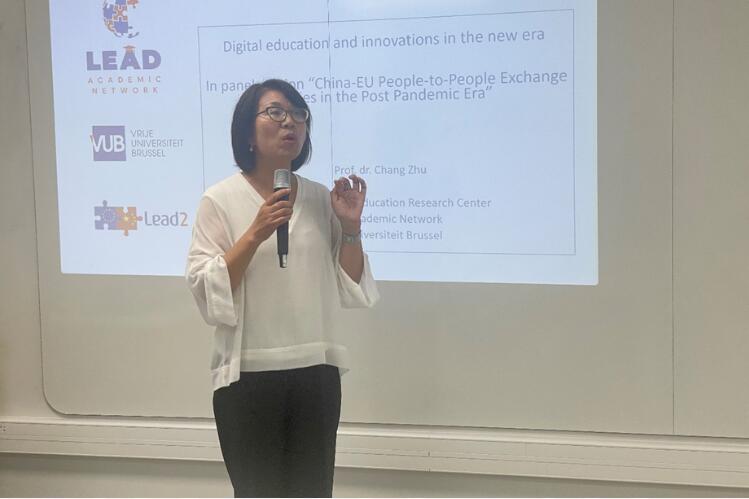
Prof. Chang ZHU, Director of the EU-China Centre for Higher Education Research (ECHE) and the Centre for Online and Blended Learning (ECHE), introduced the role of e-learning tools in promoting higher education exchanges and cooperation between China and Europe, based on the use of online education platforms for higher education in China and the EU during the COVID-19 pandemic. In particular, the positive impact of e-innovation, online and blended learning models and MOOCs on international academic mobility, academic leadership and EU-China academic cooperation is comprehensively analyzed.

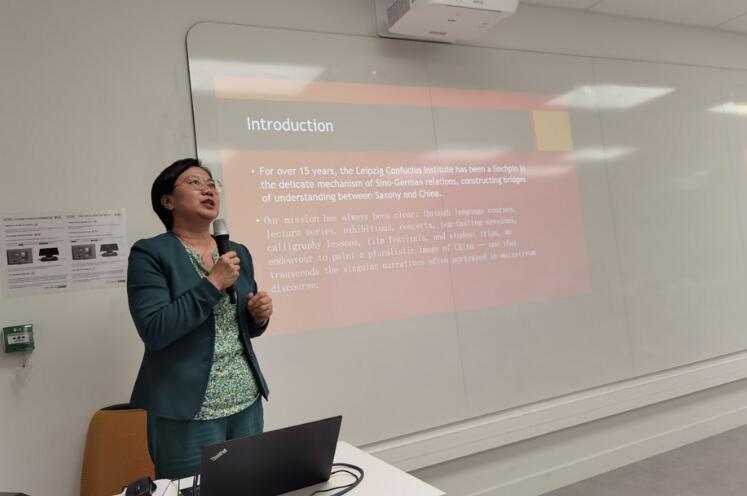
Associate Professor Yang Qingfang, Chinese Director of the Confucius Institute in Leipzig and School of Continuing Education at Renmin University of China, introduced the difficulties and challenges caused by the epidemic to the teaching of Chinese language and the dissemination of traditional Chinese culture at the Confucius Institute in Leipzig, Germany. To explore the role that Confucius Institutes can play during and after the epidemic in rebuilding China’s national image and increasing the enthusiasm of European people to learn Chinese and understand traditional Chinese culture.

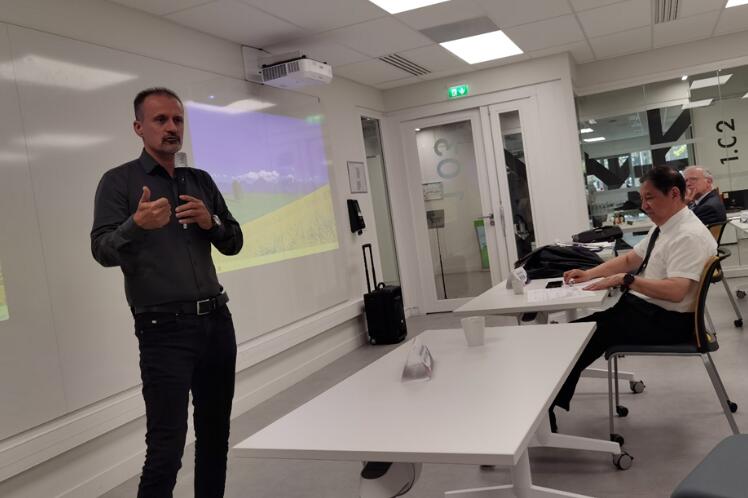
Professor Csaba Moldicz, Dean of the School of International Studies and Director of the Center for International Economics of Matthias Corvinus College in Hungary, discussed the influence and shaping role of Chinese investment in Europe under the framework of the Belt and Road Initiative on European people’s attitudes towards China, taking Chinese investment in Europe as an entry point. In-depth analysis of the two-way interaction between people-to-people exchanges and economic and trade cooperation, and taking the economic and trade exchanges between China and CEECs as an example to discuss the impact of CEECs on the overall China-Eu relations.

Professor Michel Espagne, Director of the CNRS Program at ECole Normale Superieure (ECole Normale Superieure), discussed the significance of the exchange of students and scholars between China and France in enhancing academic dialogue and mutual understanding, taking the project cooperation between Ecole Normale Superieure and Fudan University in the fields of literature, history and philosophy as an example. In particular, courses on Chinese history and culture in France and courses on French history and culture in China can help students understand, understand and recognize each other, and it is suggested that China-Eu cooperation and exchange programs in the field of humanities and social sciences should be appropriately expanded to strengthen people-to-people exchanges and enhance political mutual trust.

Prof. Yang Huilin, Director of the Center for China-Eu People-To-People and Cultural Exchange and the Center for European Studies at Renmin University of China, thanked the participating scholars and summarized the discussion at the forum, stressing in particular the importance of cross-disciplinary perspectives in the field of people-to-people and cultural exchange, strengthening and expanding existing exchanges and cooperation projects to enhance understanding between China and Europe. Promote sustainable political and economic development between the two sides.

Zhai Dongsheng, head of the Regional National Research Institute, was invited to meet with UAE Ambassador to China Hamadi

On the morning of October 19, 2023, Professor Zhai Dongsheng, Vice Dean of the School of International Relations of Renmin University of China and head of the Institute of Regional Studies, and his delegation were invited to the Embassy of the United Arab Emirates in China and held talks with H.E. Hussain bin Ibrahim Al Hammadi, UAE Ambassador to China.

Ambassador Hamadi warmly welcomed the visit of Professor Zhai Dongsheng and his delegation. Professor Zhai Dongsheng then briefed Ambassador Hammadi on the history of Renmin University of China and detailed the progress made by the School of International Relations and the Institute of Regional and National Studies in the fields of talent training, scientific research achievements and international exchanges. He said he looks forward to conducting in-depth scientific research cooperation and cross-cultural exchanges with think tanks and higher education institutions in the UAE to contribute to the construction of a community with a shared future for mankind. Ambassador Hammadi spoke highly of RUC’s glorious history and achievements in recent years, and expressed his hope that more outstanding students from the UAE could come to RUC to study. He also introduced the popularity of Chinese language teaching in the UAE, saying that the two countries have long maintained friendly cooperative relations and look forward to further strengthening cooperation in educational exchanges and personnel visits.

In addition, the two sides had in-depth exchanges on a range of topics, including “peace diplomacy” with Chinese characteristics, Chinese-style modernization, the construction of China’s own knowledge system, the challenges facing neoliberal globalization, cooperation in diplomas and non-diplomas education, and artificial intelligence and educational innovation. Both sides agreed that these issues will provide rich cooperation opportunities for future cooperation, promote cultural and knowledge exchanges between China and Argentina, and realize people-to-people bonds between the two countries.
Counsellor Khaled Al Shehhi, Deputy head of the UAE Embassy in China, and Ji Xianbai, associate professor of the School of International Relations of Renmin University of China, also attended the talks.

The Department of Border and Ocean Affairs of the Ministry of Foreign Affairs visited the regional National Research Institute and held a discussion

On the afternoon of October 19, leaders of the Department of Border and Ocean Affairs of the Ministry of Foreign Affairs gave an internal lecture on the recent development of China-India relations in Conference Room 813 of the Mingde International Building, which was organized by the South Asia Studies Program of the Institute of Regional Studies of Renmin University of China. Prof. Wang Junqi from the School of Philosophy of Renmin University, Prof. Liu Lina and Prof. Wang Zhaodong from the School of International Relations, Prof. Wu Lin from the Foreign Affairs University, Prof. Xu Qin and Prof. Ding Xinting from the Institute of Modern International Relations attended the lecture and conducted internal exchanges.

Harvard Professor Joseph Nye visits School of International Studies, Renmin University of China

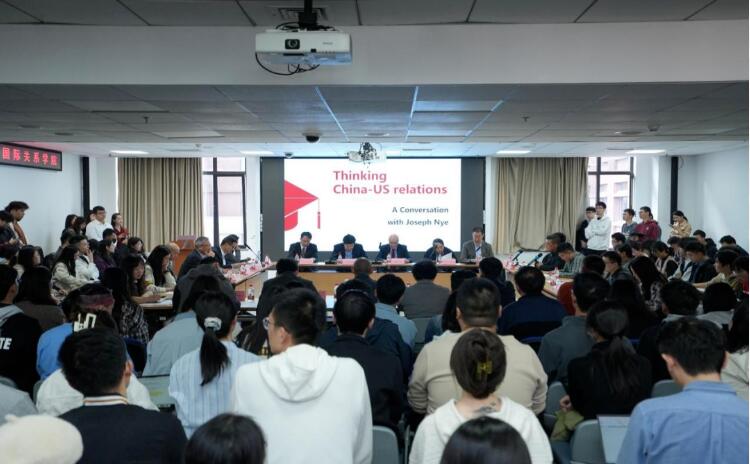
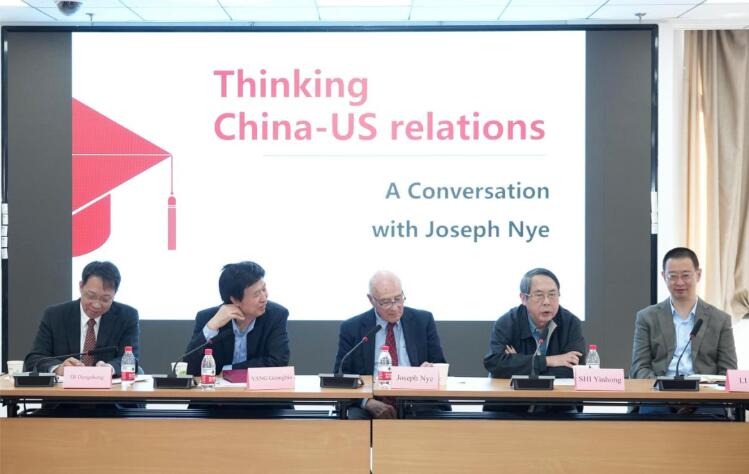
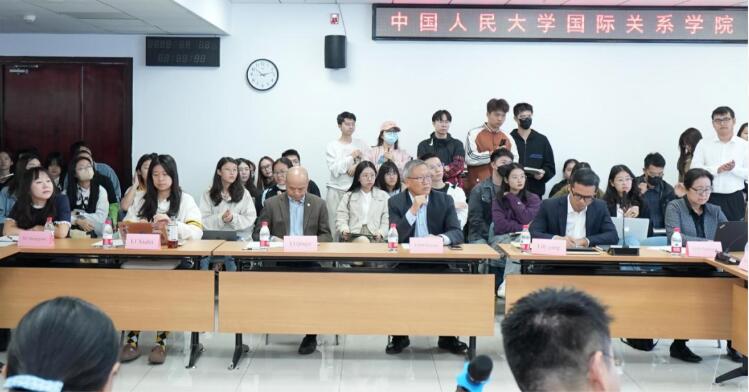
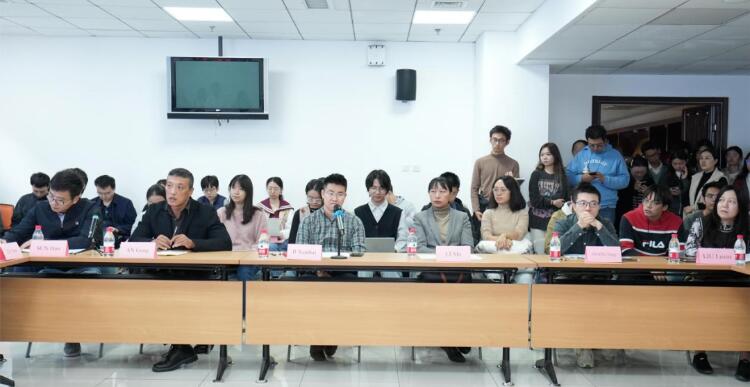
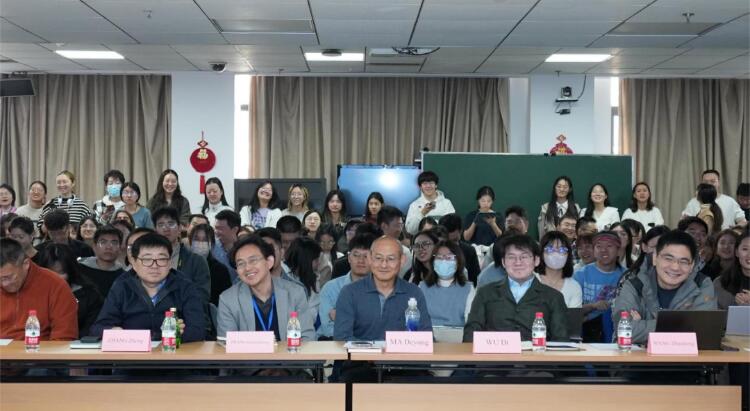
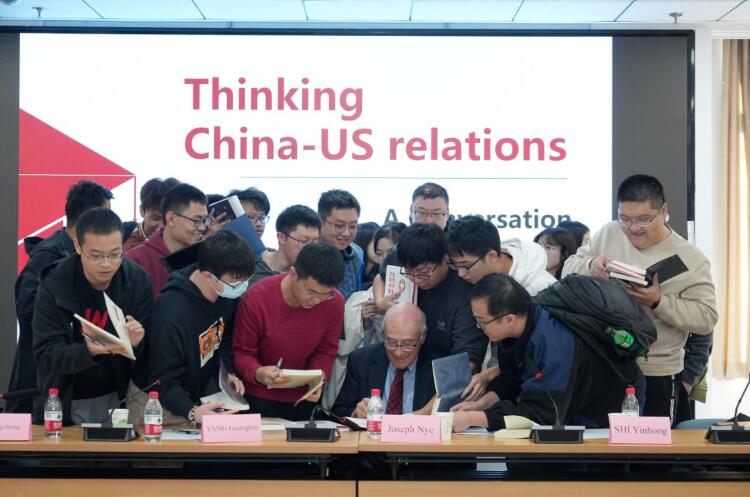
On the morning of October 24, 2023, Professor Joseph Nye Jr., Distinguished Contribution Professor of Harvard University and former dean of the Kennedy School of Government, was invited to visit the School of International Relations of Renmin University of China to have a two-hour exchange and discussion with teachers and students of Renmin University of China on China-Us relations. More than 20 teachers and experts from the School of International Relations, Renmin University of China, Hillhouse Artificial Intelligence School, Law School, Marxism School, World Knowledge Publishing House, as well as students of related majors and international students participated in the exchange and discussion. Li Chen, vice president of the School of International Relations, moderated the discussion.

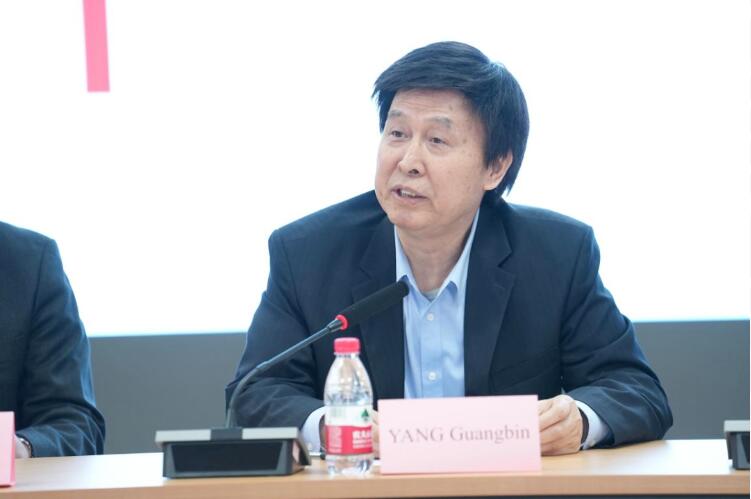
Dean Yang Guangbin made an opening speech and welcomed Professor Nye and all the teachers and students. Dean Yang Guangbin pointed out that Professor Nye’s theoretical research and classic works have a great impact on teachers and students in the field of international relations, introduced the theoretical innovation and research progress of the school, and stressed the need for exchanges with top international scholars in the process of discipline construction and talent training, so he is very much looking forward to the upcoming wonderful dialogue.


In his keynote speech, Professor Joseph Nye Jr. first said that he was very happy to be back in China after four years of COVID-19, and he looked forward to today’s discussion to communicate different views and develop real dialogue.

Professor Nye pointed out that looking back at Sino-US relations since 1949, there seems to be a phase every 20 years. During the first two decades of the Cold War, China and the United States faced off against each other. President Nixon’s visit to China in 1972 began a phase of “quasi-alliance” against the Soviet Union, and the end of the Cold War ushered in a third phase, a period of deepening economic and social ties and contacts. Since 2015, Sino-US relations seem to have entered a new chapter of “great power competition”, and Professor Nye pointed out that there are problems in understanding today’s term “new Cold War”. “New Cold War” can be used to describe the state of comprehensive competition, but in the real context, the Sino-US relationship today is very different from that during the Cold War. Interdependence still exists, and there is no prospect of complete decoupling in the economic field. The “small courtyard wall” involving technology and security has brought about partial decoupling, and it also faces the dilemma of the continuous expansion of the “small courtyard” area. At the same time, there are great prospects and needs for economic and ecological cooperation between China and the United States, such as large-scale economic and trade exchanges and joint responses to problems such as atmospheric damage, melting ice caps, and rising sea levels. These exist to ensure that the two countries must cooperate, otherwise there will be devastating consequences for both countries and the world. This is where soft power can come into play.

Whether Kevin Rudd calls for “Managed Competition”, Prof Nye argues, Both “Competitive Coexistence,” as emphasized by Antony Blinken at the Aspen Security Dialogue, have inherent contradictions that pose challenges to the world. Professor Nye pointed out that it is noteworthy that both China and the United States pose existential threats to each other, and both need to manage competition while maintaining cooperation to address key issues such as the epidemic, the environment, and economic and financial stability. No matter how long the current situation lasts, all parties involved need to find a balance between competition and cooperation. In addition to preventing the misreading of the lessons of the Cold War, we should also pay attention to the lessons of 1914, when great powers slipped into war through miscalculation.

During the discussion and exchange session, Yin Hong, Zhai Dongsheng, Luo Tianhong, Sun Hao, Liu Yang and An Gang gave speeches successively.

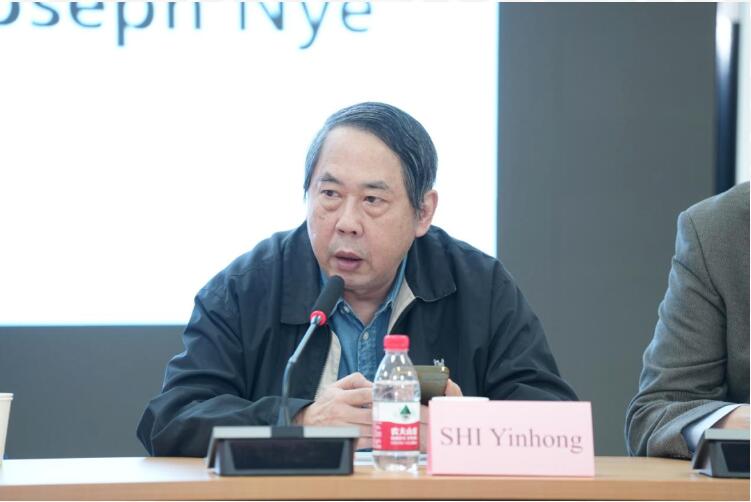
Professor Shi Yinhong of the University of International Relations elaborated on the influence of diplomatic strategy tradition, strategic goal determination, means selection, decision-making system, internal and external linkage and other factors on soft power.

Professor Zhai Dongsheng, director of the Institute of Regional Studies at Renmin University, first thanked Professor Joseph Nye for his candid comments on China-Us relations, and raised different views from the Chinese perspective, such as the domestic political and economic momentum after the 2008 financial crisis. Zhai then raised some questions about the practical application of soft power. First, the changing trend of US soft power under the influence of domestic politics; Second, what methods should China use to enhance its soft power in the so-called competitive and cooperative relationship?

In response to Nye’s speech, Associate Professor Luo Tianhong of the School of International Relations said that there is a discrepancy between the concept and practice of the international order, and even the problem of exclusivity is worthy of attention. Professor Luo also raised questions about the current status and development of liberal international relations theory and the influence of various theoretical schools in the United States.

Sun Hao, associate professor of Gao Ling Institute of Artificial Intelligence, raised the possibility of future Sino-US cooperation in specific functional fields from the perspective of artificial intelligence scientists, pointing out that scientific and technological cooperation is mainly generated at the level of companies rather than between governments, and many potential problems may arise in the future if governments fail to formulate common rules and laws. Second, government leaders need to come up with healthy competition mechanisms to avoid conflicts. Third, there are many problems in the world today, such as climate change and terrorism, and AI technology may help contribute to the solution; Finally, the common challenges facing the development of AI technology, such as fairness, privacy, ethics and other issues, need to be solved by the cooperation between China and the United States in the future.

Liu Yang, Assistant professor of the Law School, explained the “rules-based world order” from the perspective of international law, pointed out its relationship with the credibility of the United States, and discussed the core interests of both China and the United States, proposing that the premise of regulating competition is to respect the core interests of both sides. In addition, Professor Liu Yang proposed that the foundation of cooperation is to build trust, and the future of the international mechanism needs to strike a balance between building trust and seeking competition.

An Gang, editor of World Knowledge magazine and a special expert at the Center for Strategic and Security Studies at Tsinghua University, pointed out that although the idea of cooperative competition is more influential, the two sides also need to prevent the emergence of non-cooperative competition, maintain dialogue and peaceful coexistence with a responsible attitude toward the future, and prevent miscalculation of each other’s core interests and strategic goals.

Based on the discussion and questions of the scholars, Professor Joseph Nye responded by comparing the soft power of China and the United States, and proposed that soft power can achieve its goals through its own attractiveness, which can be used for both competition and cooperation, and should play a role in managing Sino-US relations. He also pointed out that universities are an important source of soft power. Professor Nye stressed that cooperation at the institutional level still exists, and that communication can lead to a better understanding of each other’s positions, which is good for both countries and the world. For the development of international relations theory, Nye believes that the balance of power and other issues concerned by realism theory are the starting point for understanding international issues, which has certain value, but the observation and understanding of international issues can not be stagnant in the perspective of realism.

Professor Li Shi, Associate Professor Ji Xianbai and other students from the School of International Relations participated in the supplementary questions, and discussed further with Professor Joseph Nye on the evolution and applicability of the liberal school of theory, the concept of limited war and historical cases, and “Thucydides Trap”. The seminar ended with warm applause from the audience. After the meeting, the students actively exchanged and interacted with Professor Nye.

The seminar on the Russia-Ukraine Conflict and the New Eurasian International Order was successfully held

10月21日,中国人民大学“俄乌冲突与欧亚国际新秩序”学术研讨会在明德国际楼408会议室成功举办。本次研讨会由中国人民大学国际关系学院和中国人民大学区域国别研究院联合举办。来自中国社会科学院、国防大学、军事科学院、中国现代国际关系研究院、外交学院、中国国际问题研究院、中国政法大学和中国人民大学等单位的20多位专家学者出席本次研讨会。

Former UN Under-Secretary-General Hochschild visited the regional National Institute

On October 30, 2023, Mr. Fabrizio Hochschild, former Under-Secretary-General of the United Nations, visited Renmin University of China and met with Professor Zhai Dongsheng, Deputy Dean of the School of International Relations and head of the Institute of Regional Studies.

Professor Zhai Dongsheng first extended a warm welcome to Mr. Hochschild and his delegation on behalf of the Regional National Research Institute of Renmin University of China, and then introduced the development history of Renmin University of China and the Regional National Research Institute. Mr. Hochschild spoke highly of the glorious history and outstanding educational achievements of Renmin University of China, and expressed his willingness to actively support and participate in the work of the regional national institutes.

During the meeting, the two sides also discussed in depth a range of important issues with global implications. From the perspective of global economic system reform, Mr. Hochschild and Professor Dongsheng Zhai discussed the development trend of the Chinese economy, the problems of the grey economy in developing countries, and the issues of non-traditional security. In addition, topics such as US-China relations, the evolution of world thought, the rise of populism in the West, and the impact of social media on political polarization and ideological radicalization were also included in the discussion.

During the meeting, Mr. Hochschild’s head of China affairs, Ms. Gao Ling, and Associate Professor Ji Xianbai of the School of International Relations also participated in the discussion. Through this exchange, the two sides gained a deeper understanding of each other’s work and views, and also laid a solid foundation for future cooperation.